Showing posts with label Essbase. Show all posts

November 27, 2015

Learn About Hyperion & Oracle BI... 5 Minutes at a Time

Since early 2015, we've been trying to figure out how to help educate more people around the world on Oracle BI and Oracle EPM. Back in 2006, interRel launched a webcast series that started out once every two weeks and then rapidly progressed to 2-3 times per week. We presented over 125 webcasts last year to 5,000+ people from our customers, prospective customers, Oracle employees, and our competitors.

In 2007, we launched our first book and in the last 8 years, we've released over 10 books on Essbase, Planning, Smart View, Essbase Studio, and more. (We even wrote a few books we didn't get to publish on Financial Reporting and the dearly departed Web Analysis.) In 2009, we started doing free day-long, multi-track conferences across North America and participating in OTN tours around the world. We've also been trying to speak at as many user groups and conferences as we can possibly fit in. Side note, if you haven't signed up for Kscope16 yet, it's the greatest conference ever: go to kscope16.com and register (make sure you use code IRC at registration to take $100 off each person's costs).

We've been trying to innovate our education offerings since then to make sure there were as many happy Hyperion, OBIEE, and Essbase customers around the world as possible. Since we started webcasts, books, and free training days, others have started doing them too which is awesome in that it shares the Oracle Business Analytics message with even more people.

The problem is that the time we have for learning and the way we learn has changed. We can no longer take the time to sit and read an entire book. We can't schedule an hour a week at a specific time to watch an hour webcast when we might only be interested in a few minutes of the content. We can't always take days out of our lives to attend conferences no matter how good they are.  So in June 2015 at Kscope16, we launched the next evolution in training (epm.bi/videos):


#PlayItForward is our attempt to make it easier for people to learn by making it into a series of free videos.  Each one focuses on a single topic. Here's one I did that attempts to explain What Is Big Data? in under 12 minutes:

As you can see from the video, the goal is to teach you a specific topic with marketing kept to an absolute minimum (notice that there's not a single slide in there explaining what interRel is). We figure if we remove the marketing, people will not only be more likely to watch the videos but share them as well (competitors: please feel free to watch, learn, and share too). We wanted to get to the point and not teach multiple things in each video.

Various people from interRel have recorded videos in several different categories including What's New (new features in the new versions of various products), What Is? (introductions to various products), Tips & Tricks, deep-dive series (topics that take a few videos to cover completely), random things we think are interesting, and my personal pet project, the Essbase Technical Reference.

Essbase Technical Reference on Video

Yes, I'm trying to convert the Essbase Technical Reference into current, easy-to-use videos. This is a labor of love (there are hundreds of videos to be made on just Essbase calc functions alone) and I needed to start somewhere. For the most part, I'm focusing on Essbase Calc Script functions and commands first, because that's where I get the most questions (and where some of the examples in the TechRef are especially horrendous). I've done a few Essbase.CFG settings that are relevant to calculations and a few others I just find interesting.  I'm not the only one at interRel doing them, because if we waited for me to finish, well, we'd never finish. The good news is that there are lots of people at interRel who learned things and want to pass them on.

I started by doing the big ones (like CALC DIM and AGG) but then decided to tackle a specific function category: the @IS... boolean functions. I have one more of those to go and then I'm not sure what I'm tackling next. For the full ever-increasing list, go to http://bit.ly/EssTechRef, but here's the list as of this posting: 
To see all the videos we have at the moment, go to epm.bi/videos. I'm looking for advice on which TechRef videos I should record next. I'm trying to do a lot more calculation functions and Essbase.CFG settings before I move on to things like MDX functions and MaxL commands, but others may take up that mantle. If you have functions you'd like to see a video on, shoot an email over to epm.bi/videos, click on the discussion tab, and make a suggestion or two. If you like the videos and find them helpful (or you have suggestions on how to make them more helpful), please feel free to comment too.

I think I'm going to go start working on my video on FIXPARALLEL.

September 28, 2014

Oracle Exalytics X4-4 - Bigger, Better, Stronger

X4-4 - Same price as the X3-4 but with more power

The big announcement about it is today at OpenWorld (it would be awesome if they mentioned it during the Intel keynote tonight), but the Exalytics X4-4 is actually available now.  It's the same price as the X3-4 ($175,000 at list not including software, maintenance, tax, title, license, yada yada).  This does mean the X3 is - effective immediately - no longer available, but then again, since the new one is the same price, I'm not sure why anyone would want the older one.  No word yet on if you can upgrade an X3 to an X4, but since they did offer an upgrade kit from X2 to X3 (though I never heard of anyone buying it), I'm guessing there will be one for those wanting to make an X3 into an X4.

X4-4 Specs

The main improvement over the X3 is the number of cores: it's still 4 Intel chips, but those chips all now have 15 cores on them, meaning the X4 has 60 cores compared to the X3's 40 cores.  Here are the important details:

  • 4 Intel Xeon E7-8895v2 processors running at 2.8 - 3.6 GHz
  • 8 - 60 cores (capacity on demand, more on this in a second)
  • 2 TB of RAM
  • 2.4 TB of PCI flash
  • 7.2 TB of hard disk running at 10K RPMs (not that fast these days)
  • 2 Infiniband ports running at 40 Gb/s
  • 4 Ethernet ports running at up to 10 Gb/s

Cool Thing 1: Variable Speed & Cores


You probably heard about this last July.  Oracle worked with Intel to design a line of their Xeon E7-889x chips specifically for Oracle.  What we didn't realize until we saw it show up on the X4 spec sheet was that the chips were going in the Exalytics X4.  Simply put, on the fly, Exalytics can vary how many cores it uses and when it's fewer cores, the speed goes up.  If it's running 15 cores per chip, Intel sets the speed to 2.8 GHz.  If it's only using 2 cores per chip the speed goes all the way to 3.6 GHz (a GHz is one billion clock ticks per second).


July 16, 2013

Exalytics - Version X3-4 is Here

I've mentioned before that the Exalytics X3-4 was nearly available (the first clue was when it hit the engineered system price list back on June 4).  It was talked about at-length during the Kscope13 Sunday Developer's Symposium and... it's finally here.


Hardware Upgrades


  • RAM.  Doubling from 1 terabyte to 2 terabytes.  This will help everything on the box but those of us running Essbase now have even more RAM to use for making RAM drives.
  • Flash.  Exalytics now comes standard with 2.4 TB of flash.  I mentioned this earlier as an upgrade option to the Exalytics X2-4, but it now is native to the X3-4.  As mentioned in my earlier article, flash impacts Essbase performance far more than OBIEE (which isn't as disk I/O intensive).  Having .25 millisecond read latency (what these flash drives are rated) means there's virtually no seek time finding values in an Essbase cube on disk.  I'm expecting most Essbase customers will put their physical cubes on the flash drives and then quickly load them into a RAM drive upon start up (which has better performance than reading into the Essbase caches for each database).
  • Hard Drive.  They are upping the traditional hard drives from 3.6 TB to 5.4 TB.  It still has 6 physical drives in it, but they are going from 600GB drives to 900GB drives. [Updated on 8-25-2013.]
The cores (still 40) stay the same... for now.  At some point, someone is going to start hitting these limits and they're probably up the cores and I wouldn't be surprised if they went 100% flash drives in a future release.

Software

X3-4 supports OBIEE 11.1.1.7, Endeca 3.0, Essbase 11.1.2.3, and any Linux-allowed Hyperion EPM product on 11.1.2.3.  They also strongly imply that there are some Essbase optimizations in 11.1.2.3 that only work on Exalytics, but I haven't found them yet to verify.  Regardless, Exalytics X3-4 is the best engineered system you can currently buy for Essbase, bar none.

Pricing: $175,000

The X2-4 was $135,000 for the hardware (software sold separately), but to add-on flash, you paid an additional $35,000 giving us a real price for X2-4 of $170,000.  The new box is $175,000... and for that additional $5,000, they double the RAM and increase the hard drives 50%.  In other words, you're getting a hell of a deal.  For what is literally $40,000 more in total, you're getting 1 TB more of RAM, 2.4 TB of really good flash, and 1.8 TB of additional hard drive.

What if I Already Bought an X2-4?

First of all, congratulations.  You're really smart, despite what your high school guidance counselor said.  To upgrade your X2-4 to an X3-4, you can buy an upgrade kit!  The upgrade kit (to get flash and the 1 TB of RAM) does cost $105,000 though.  So your X2-4 with an upgrade to an X3-4 will end up costing you $240,000 in total.  Oracle will support your X2-4 under their lifetime support policy even though it is being phased out.  

Availability

You can order an X3-4 now.  I haven't seen one actually ship yet, but it was just officially launched yesterday.  While I think you can still buy the X2-4 until the end of this quarter (August 31, 2013), I'm not at all sure why you would.  Find the extra $40K and get not only blazingly fast flash drives but more RAM than you know what to do with.

July 4, 2013

Major Price Cuts in Essbase, OBIEE, BIFS, and OSSM

Pricing Went Down 25-40%

While Oracle is pretty good at giving discounts off list price, it's rare when they actually cut their list prices.  Shockingly, they just lowered (for what I believe is the first time since these products made it onto the price lists) the per processor prices on several of their Business Intelligence offerings: Essbase, OBIEE (Oracle Business Intelligence Foundation Suite), BIFS (Business Intelligence Foundation Suite), and OSSM (Oracle Scorecard & Strategy Management).

Per the price list dated June 25, 2013, the per processor prices have dropped substantially:

  • Essbase went from $184,000 to $138,000.  That's a 25% decrease.
  • OBIEE went from $295,000 to $221,250.  That's also a 25% decrease.
  • BIFS went from $450,000 to $300,000.  That's a 33% decrease.
  • OSSM went from $149,250 to $89,550.  That's a 40% decrease.
Now think about this for a second.  BIFS (Business Intelligence Foundation Suite) comes with Essbase, OBIEE, OSSM, and a few other fun things like EAL4HFM (Essbase Analytics Link for HFM).  BIFS was already a great deal because just buying Essbase, OBIEE, and OSSM separately was setting you back $628,250 but as a bundle costs you only $450,000.  That's a 28% decrease off just those 3 components separately.  Now those separate components list at $448,800 or if you buy the BIFS bundle, $300,000 which is a 33% discount off the components separately.

In other words, you now get OBIEE, Essbase, OSSM, and some other products for just $5,000 more per processor than OBIEE cost alone 2 weeks ago (it was $295,000, remember).  The named user costs for these products has not changed which means that they are positioning these price cuts directly at the enterprise customers: companies who are looking to adopt Oracle Business Analytics across their organization.  Considering those prices above are list, enterprise customers should be getting a discount starting off those prices which makes processor licensing start to seem very attractive for large deployments.

Core Factors

Also remember that Oracle doesn't charge this full price for every core on the processor.  They have a "processor factor" which charges less per core.  Depending on the type of processor, the Oracle Processor Core Factor Table will charge between 25% and 100% of the list processor price.

Take Exalytics X2-4, for example.  It has 4 Intel Xeon E7-4800 chips in it.  Each of those chips has 10 cores giving you 40 cores in total.  Based on the Processor Factor, these cores count as only half a processor.  In other words, to license a full X2-4, you'd need to pay for 20 processor licenses which at the new $300,000 price means a list of $6,000,000.  That's the maximum (not including tax, maintenance, TimesTen, etc.) that you'd pay but it would assumedly come in less than that which is really impressive to license an entire Exalytics box for unlimited users.  Unlimited, people.  Your whole organization could access OBIEE and Essbase for at most $6MM in software.

This may be the pricing discount your company needs to buy unlimited user licenses of Oracle Business Analytics.  And don't hold your breath for Oracle to drop any more list prices.  Take it as a gift and buy it before they change their minds.

Update as of 7-15-13

According to an article on Information Week, during the release of Exalytics X3-4, Paul Rodwick was asked about the recent price decreases mentioned above.  He gave the intriguing response that while the prices did go down, it's "old news" because Oracle stealthily did it 9 months ago.  While I don't have the technology price list he's referring to (if you do, post a link to it in the comments), here's Paul's quote:
The cost for BI Foundation Suite on a named-user basis has never been changed, but about nine months ago we adjusted per-CPU pricing in part because we were seeing more customers want to license the full complement of Exalytics.

June 6, 2013

Looking Forward to Kscope13

On June 9, the rates for Kscope13 go up $300 per person (basically, you're going up to the last minute, I-don't-know-why-I-waited-but-now-it-costs-a-lot-more price).  If you haven't registered yet for what is by far the best Oracle EPM, BI, Hyperion, Business Analytics, Essbase, etc. conference in the world, go right now to kscope13.com and register.  It'll be the best training experience of the year: you're basically getting 4.5 days of training that you won't see anywhere else the entire year... for the price of 2 days of training at an Oracle training center.

And when you register, don't forget to use promo code IRC to save $100 off whatever the current rate is.

The conference is June 23-27 in New Orleans though my favorite day is always the opening Sunday, so make sure you fly in Saturday night.  On Sunday, they turn the sessions over to the Oracle Development team to talk about everything they have planned for the next 1-3 years.  It's the one time each year that you can hear right from the people who are building it what you're going to be seeing in the future.  There's generally an hour on each major product line (an hour on Essbase, an hour on Hyperion Planning, an hour on mobile BI, etc.).  The keynote this year is Balaji Yelamanchili, the head of Oracle BI and EPM development for Oracle.  My only semi-complaint about this year's BI/EPM Symposium is that there's so much content that they're splitting it into three concurrent symposiums: Business Intelligence, EPM, and a special symposium for the EPM business users.

This year will be somewhat bittersweet for me since I am no longer actively involved with the chairing of the conference.  This means that I get to focus on going to sessions, learning things, playing/leading Werewolf games, and of course, presenting a few sessions.  Here are the ones I'm personally teaching:


  • Using OBIEE to Retrieve Essbase Data:  The 7 Steps You Won’t Find Written Down.  This is in the BI track and it's basically all the quirks about connecting OBIEE to Essbase in a way that uses the strengths of each product.
  • What’s New in OBIEE 11.1.1.7: Oracle on Your iPhone & Other Cool Things.  This is also in the BI track and it's an overview of all the things that people will like in 11.1.1.6 (for both Hyperion and relational audiences).
  • Everything You Know About Essbase Optimization  is Incomplete, Outdated, Or Just Plain Wrong.  This is in the Essbase track and it's the one I'm most looking forward to delivering, because I get to break all of the optimization rules we all have been accepting as gospel for close to 20 years.
  • Learn From Common Mistakes: Pitfalls to Avoid In Your Hyperion Planning Implementation.  This is a vendor presentation hosted by interRel.  I get to sit on the panel and answer Planning questions from the audience while talking about blunders I've seen during Planning implementations.  It should be fun/rousing.  Since it's all interRel, I wouldn't be surprised if a few punches were thrown or at minimum, a few HR violations were issued.
  • Innovations in BI:  Oracle Business Intelligence against Essbase & Relational (parts 1 and 2).  This is also in the BI track (somehow I became a BI speaker???) and I'm co-presenting this session with Stewart Bryson from Rittman Mead.  We'll be going over OBIEE on Essbase on relational and compare it to OBIEE on relational directly.  Stewart is a long-time friend and Oracle ACE for OBIEE, so it should let us each showcase our respective experiences with Essbase and OBIEE in a completely non-marketing way.
  • CRUX (CRUD meets UX): Oracle Fusion Applications Functional UI Design Patterns in Oracle ADF.  This is in the Fusion track and I'll be talking about how to make a good user interface as part of the user experience of ADF.  No, this doesn't have a thing to do with Hyperion.
I am looking forward to all the wacky, new things Mike Riley (my replacement as Conference Chair for Kscope) has in store.  My first Kscope conference was in New Orleans in 2008 (back when they called it Kaleidoscope and no one was quite sure why it wasn't "i before e") so this is a homecoming of sorts albeit with 8 times as many sessions on Oracle BI/EPM.  If you're there (and let's face it, all the cool kids will be), stop by the interRel booth and say "hi."  It's the only 400 square feet booth, so it shouldn't be hard to find.

May 13, 2013

Exalytics - Now with 2.4 Tb of Flash

I'm not sure why there wasn't a major announcement about this, but as of April 9, customers buying an Exalytics machine to speed up their Oracle Business Intelligence can get 2.4 Tb of PCIe flash drives from Oracle certified and engineered to run on Exalytics.  The cost (as of April 9's price list) is $35,000 (search for "flash upgrade kit").

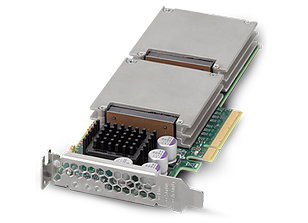
While I haven't seen one in action yet, the flash pack seems to be 6 Sun Flash Accelerator F40 PCIe Cards each of which has a capacity of 400 Gb.  These cards run amazingly fast with read times of more than 2 GB/second (write time is about half that speed at 1+ GB/second).  These cards normally sell for almost $6K each, so Oracle is providing the flash add-on pack for no more markup than you'd get if you bought them on your own (but you'd then have to get them into the Exalytics machine all on your own).

This Matters If You Own Essbase

Why would you want this?  Essbase, primarily.  Essbase uses a ton of disk I/O and one of the ways Exalytics can speed up Essbase is by pulling your cubes into a RAMDisk (since you have 1 Tb of RAM to play with).  At some point, though, it has to get that data from physical drives to a RAMDisk (unless you're building all your cubes at start up in memory each time).  Having blazingly speedy flash drives with .25 millisecond read latency allows you to store your cubes on the flash drive and then pull into RAM much more quickly than reading from traditional drives.

We have tested Essbase running on flash drives and it helps everything (particularly minimizes the negative effects of fragmentation since seek time drops to basically nothing on flash).  For customers buying Exalytics primarily for Essbase, the Exalytics Flash Upgrade Kit should be strongly considered with every Exalytics purchase (and if you already own Exalytics, buy it to put on top).

OBIEE is much less affected by hard drives, so while it may help OBIEE, this really matters a lot more to Essbase customers.

Oracle EPM Fully Supported on Exalytics

Since we're on the subject of Exalytics, now that 11.1.2.3 is out, all Oracle EPM/Hyperion components certified to run on Linux will run on Exalytics PS2.  These include:

  • Administration Services
  • Calculation Manager
  • EPM Workspace
  • Essbase Server
  • Essbase Studio Server
  • Financial Reporting
  • Interactive Reporting (32-bit only)
  • Oracle HTTP Server
  • Planning
  • Profitability and Cost Management
  • Production Reporting (32-bit only)
  • Provider Services
  • Reporting and Analysis Framework Services and Web Application 
  • Shared Services
  • Web Analysis

April 29, 2013

All the Cool New Features in Oracle EPM 11.1.2.3

Oracle EPM 11.1.2.3 is out and there are some great features in it (Planning and Financial Reporting have my favorites which you'll see in a second).  11.1.2.3 is not as impressive as 11.1.2.1 or 11.1.2.2, though.  A lot of the products got new features in between releases like Smart View (which adds new features with every patch set), Strategic Finance, HFM (which got Tax Provisioning in February), and Financial Close Management instead of making those products wait until 11.1.2.3 was officially released.

Below are the features I think are most interesting in 11.1.2.3.  This is by no means an exhaustive list and I didn't include every product though I did hit all the ones with significant market share (and a few others including a shout-out to the long-forgotten "EPM Workspace").  All the new feature documents are on Oracle.com.  If you see anything major I missed, let me know in the comments.


Oracle Essbase

  • Essbase didn't change much in 11.1.2.3 and users are never going to see any of the changes.
  • There are several new BSO functions and calc script commands like @INTERSECT, @ISMBRUDA, @ISRANGENONEMPTY, @MEMBERAT, @RANGEFIRSTVAL, and @RANGELASTVAL.  My favorite is @CREATEBLOCK which, wait for it, creates a sparse block with all the dense combinations in it set to missing.  Yes, we finally have a specific command to create specific blocks after 20+ years of silly block creation workarounds.
  • There's a new calc script SET command called RUNTIMESUBVARS that let's you create substitution variables in the script that are passed to the script at run-time.  You can then pass values to these variables when you call the calc scripts from MaxL or the API.  There's a new optional argument (with runtimesubvars) to MaxL's "execute calculation" command that sends the run-time variables to the calc script as you call it.
  • There's a new Essbase.CFG setting called ESTIMATEDHASHSIZE that lets you specify (in millions) how many members should be loaded into memory from the outline.  It's meant to speed up massive dimension builds and outline edits.  There are two other new CFG settings as well: ENABLERTSVLOGGING (which logs the new run-time substitution variables) and UNICODEENABLE (which sets the server to unicode mode, basically).
  • Performance has been improved on ASO dimension builds (specifically with duplicate members), the JAPI, and most helpful for many people including Hyperion Planning users, @XREF has been improved in some cases as much as 40-times.
  • Data Mining is gone.  Many people didn't even know it was there, but it's been removed.
  • Speaking of gone, there is no Essbase Excel Add-In 11.1.2.3.  Further, earlier versions of the Add-In that you may have (like 11.1.2.2) are not supported against Essbase 11.1.2.3.  It probably will work (the Add-In is wonderfully backwards and forwards compatible) but it's not supported.

Smart View

  • There were a lot of improvements to Smart View in 11.1.2.2.3xx which came out about a month ago, so there isn't much new in Smart View 11.1.2.3.  Smart View is the new strategic Microsoft Office add-in for all the Business Analytics (BI and EPM) products, though, so that's why the newest release supported direct access to OBIEE 11.1.1.7.  Hyperion Strategic Finance is also now fully supported in Smart View.
  • The only major improvement is actually in Hyperion Planning just exposed through Smart View.  There is a new "Planning Admin" extension that lets administrators update Planning metadata (and a few other things) from Smart View.  I'll say more about this under Planning.

Hyperion Planning

  • Essbase ASO databases can now be created as Planning Plan Types.  These databases will allow writeback provided it's at level-0.  This is stunning.  These ASO cubes can be displayed on Planning composite forms with Essbase BSO cubes just like current BSO cubes in multiple plan types can be combined on a single composite form.  For some reason, this release doesn't put security filters on the ASO cubes, so you have to access these cubes through Planning or through the Planning ADM driver in Hyperion Financial Reporting.  Still, ASO in Planning is a step in the right direction.  Oh, and you have to own full-use Essbase to create these ASO cubes; just a Planning license doesn't cut it.
  • You can create members on the fly (kinda) if they don't exist when business rules need them.  This may only work in modules and not custom plan types.  The documentation says only modules, but I admittedly haven't tried it on custom plan types yet.
  • Custom dimension hierarchies can now vary by plan type.
  • Task lists can now include "Copy Version" and "Job Console" as tasks.
  • There is a new Task List Dashboard (gives you an overview of tasks by user, due date, etc.) and a Task List Report Page (that exports to XLS and PDF).
  • Grid Scroll Preferences lets you control if all rows/columns in a form are retrieved at once or only when you scroll down.  This should improve performance for large forms (and not slow down the internet when we want to watch cat videos on YouTube).
  • Users can now control through user preferences if they want member names, aliases, or both.  This can be set to override the form settings.
  • Outline Load Utility has been enhanced to do fun things like export metadata to a relational database or export data to a text file.  There's a new user interface for loading dimensions and data from flat files (and exporting them too).  This was previously only doable through the command line.
  • There's a new "Plan Type Editor" that lets admins add and delete plan types to already existing applications. Previously, this required going back to the initial creation step or hacking the underlying tables.  The Plan Type Editor can be used to add ASO to an existing Planning application.
  • Admins can now do some administration of Planning from within Smart View like editing dimensions, creating cubes, and refreshing cubes.
  • Workforce and CapEx have been enhanced to get them up to speed with Project Financial Planning's improvements to these modules in 11.1.2.2.  You won't get these improvements with a straight migration: you have to create a new "shell" application and manually migrate your old dimensions into the new application.
  • You can create, assign, and delete substitution variables directly from the Planning web interface.

Data Relationship Management

  • There's an entirely new module within DRM (no word yet on if it costs money, but my gut feeling is that it's included with DRM) called "Data Relationship Governance."  To oversimplify what is actually quite cool, it adds workflow to DRM.  It lets data stewards coordinate entry, validation, and approval of hierarchies but it does a lot more too.  Users can request hierarchy changes and they go into a worklist so nothing gets lost.  It has built-in alerts for when users have requested changes and it also sends e-mails when something has been sent to you or it's something you should be informed of.  In my humble opinion, this is the greatest improvement to DRM since it was created.
  • Dynamic scripting lets you use JavaScript instead of formulas to create derived properties and validations.  This is a welcome improvement over formulas since we now have access to a real programming language.
  • You can now connect directly to external relational database tables to import hierarchies.

Hyperion Financial Management (HFM)

  • There's a new module (that technically was released in February) called Hyperion Tax Provision.  It handles tax automation, data collection, tax calculations, reporting and it does it all within HFM.  Now when you create an application in HFM, you tell it if you want a Consolidation (traditional) application type or Tax Provision.
  • Data forms let you show/hide the POV members, access the dynamic POV member lists, and run "on-demand rules" to essentially calculate the data form (by running the on-demand rule on a subset of data).
  • Data grids also let you control which POV dimensions you're showing and gives you access to dynamic POV member lists.
  • Admins can turn off modules for all users if they aren't applicable (for instance, if you don't allow intercompanies in HFM).

Financial Data Quality Management (FDM)

  • FDM and ERPi (ERP Integrator) combine in 11.1.2.3 into a single product: FDMEE (Financial Data Quality Management Enterprise Edition).  It's more than just ERPi renamed which is what some are claiming.  Below are some of the improvements.
  • The UI (user interface) is now consistent with the other Hyperion products like Planning and HFM.
  • FDM is fully supported in Shared Services and Lifecycle Management.
  • Data loads are sped up.  Scaling and load balancing are fully supported.
  • ERPi users will now see full FDM functionality that they couldn't access before.
  • SAP BW is now supported directly as a data source.
  • FDM and ERPi owners have access (at no charge) to all the new FDMEE capabilities.

Financial Reporting

  • I know what you're thinking and yes, Financial Reporting actually got improved in 11.1.2.3 (it is a strategic product for Oracle). So for the coolest thing you'll see since ASO in Hyperion Planning...
  • Financial Reporting is now mobile.  That's right: it runs on Apple iPhones, iPads, Android phones and Android tablets.  Users can browse the repository, launch reports (HTML or PDF), run books (HTML or PDF), change POVs, change page members, expand rows and columns, and even launch related content.  Pick your jaw off the floor.
  • Books have been enhanced to allow cover pages before the table of contents, embedding (and launching) Word DOCs from an HTML book, and changing the starting page number of books.
  • The designer has new authoring features including a row property to show dots after the member name (to fill the column) in PDF output, custom text colors, and auto-sizing text boxes in PDF output.
  • Annotations have a new auditing capability that puts annotation info (like creation date or modified date) in a log file on the server.

EPM Workspace

  • OBIEE 11.1.1.7 is back in Workspace (it used to be there back in OBIEE 10).  You can both create and launch OBIEE from Workspace.
  • OBIEE uses single-sign on if you're logged into Workspace (OBIEE now can also share a security model with Essbase).

Web Analysis, Interactive Reporting, SQR Production Reporting...

  • Seriously?  People, move to OBIEE.  These are dead products.

General Comments

  • You can upgrade to 11.1.2.3 directly only from 11.1.1.4 and 11.1.2.x.  Earlier versions require going to either 11.1.1.4 or 11.1.2.2 first.
  • 11.1.2.3 still doesn't officially support Chrome or Safari.  The documentation says that Oracle recommends IE (Internet Explorer) 9 or Firefox 10 because older versions are slower.
  • The EPM documentation is now fully supported on Apple mobile devices (in ePub format).  It already worked on Amazon Kindles (in Mobi format).
That's all folks.  You can thank me at Kscope13 for making it so you don't have to scour all the readme files yourself.

Oh, that reminds me. Since you read this entire essay of bullets, I owe you a reward.  When you register for Kscope13 (the best Oracle BI, EPM, and Hyperion conference in the world bar none), mention promo code IRC.  It'll save you $100 off whatever the prevailing rate is.  You can tell your friends or make them read this blog to find that out themselves.

January 23, 2012

Kscope12 - Schedule is Published

Waterpark at the JW Marriott Hill Country
2012 will be my final year as conference chair for the Kscope conference.  In case you haven't heard elsewhere, in 2012, it's June 24-28 in San Antonio, TX at the gorgeous JW Marriott Hill Country.  The schedule has been finalized, published, and (I'll humbly admit this since I really had very little to do with it) it's the best schedule I've seen for a conference in my memory.  Yes, historians, the schedule is better than the last Hyperion Solutions conference because there are no marketing sessions (beyond one timeslot for clearly marked vendor sessions) and the content is deep and not just broad.

It's also not dominated by the software vendor (unlike Solutions).  When the maker of the software speaks (Oracle, in our case), it's because they're asked to speak and on topics we care about.  On the subject of Hyperion, for instance, Oracle is hosting an entire day-long symposium on what's going to be released in the future for Hyperion, Essbase, and OBIEE.  It's led by product development and not the Oracle product marketing guys.

One of the expansion areas this year is that in the areas of BI and EPM, they're adding more business and introductory content.  Here are all the dedicated BI/EPM tracks for Kscope12 amounting to over 150 sessions (click on the name of each to get a page about each track):
- Business Intelligence.  This track is led by some of the best OBIEE (and other Oracle BI product areas) people in the business.  The track has been expanded this year as the importance of BI has grown tremendously within Oracle.
- Essbase.  They have over 50 sessions all on Essbase this year.  This is more than any other conference in the world.  This track will cover intermediate to advanced Essbase sessions you won't get at conferences like Collaborate, Connection Point, or OpenWorld.
- Essbase Beginner.  This is a new track that allows people who are just getting started in the world of Hyperion to get some introductory training from the best in the business.
- Hyperion Applications. Hyperion Planning, HFM (Hyperion Financial Management), Hyperion Strategic Finance, and all the other Hyperion applications finally get a track of their own... and it has over 50 sessions dedicated to the Hyperion applications.  Like the Essbase track, this makes it the largest Hyperion application track of any conference in the world.
- Hyperion Business Content. For the first time in 2012, we are adding a track devoted to the business users.  If you're a director, manager, VP, controller, power user, or any type of person who primarily uses or manages Hyperion/Essbase instead of implementing it, you finally have a place to turn.  Since Solutions ended in 2007, a true Hyperion or EPM business-specific user didn't have dedicated content at any conference.  Collaborate tried (and no offense, failed).  OpenWorld missed dramatically by assuming most users were either CFO's or users with hard-core IT backgrounds.  Business people, welcome to Kscope.

In addition to those 150+ sessions on Business Intelligence and Enterprise Performance Management, there are other tracks serving the non BI/EPM community:

If you haven't registered for the conference yet, I will save you $100.  If you've already registered, it's too late.  When you register, put in promo code IRC (it stands for interRel Consulting) and it'll take $100 off whatever the prevailing rate is.  Consider that my gift for you reading this far in the blog (for which $100 is not nearly enough, I'm sure you're thinking).

January 12, 2012

Exalytics - Pricing Has Been Announced

The official catchy Oracle name is "Exalytics In-Memory Machine X2-4" which come to think of it is not very catchy but does sound techie.  Larry Ellison announced Exalytics at OpenWorld 2011 to great fanfare and little details.  In a nutshell, it's Essbase, OBIEE, and TimesTen running in-memory on a really powerful server.  How powerful?  40 Intel cores (4 Intel Xeon E7-4800 processors with 10 cores each), a terabyte of RAM, an InfiniBand backbone (40 GB/s when talking to Exadata), two 10 GB/s ethernet ports for connecting to non-Exadata sources, and 3.6 TB of hard drive.  Imagine Essbase running fully in memory with ethernet speeds so powerful it's like you're running Essbase locally (subject to the speed of your actual corporate network, of course).

It's an exciting development for those people who want to make BI virtually real-time.  There's even a slightly modified front-end on the OBIEE side of things to make queries a more interactive "speed of thought" activity.  If you want to make Essbase even faster, this is the solution for you.  Early benchmarks have been all over the map (I've seen 5 times improvement all the way up to 80 times improvement) but suffice to say, that once you've tuned your Essbase cubes for running in-memory, you'll be looking at five-fold improvement at the bare minimum.  If you want to learn more, Oracle has an in-depth whitepaper at:

Various rumors have leaked out on the pricing for Exalytics, but it's now been finalized and posted on the Oracle website. While there are a few places where you can find this on the web this morning (including the actual PDF of the pricing from Oracle), the best summary I've read comes from Chris Kanaracus at IDG.

Here are the pricing highlights:
  • Hardware: $135,000
  • Processor Licenses of TimesTen: $34,500
  • Named User Licenses of TimesTen: $300
  • Processor Licenses of BI Foundation Suite: $450,000
  • Named User Licenses of BI Foundation Suite: $3,675
Some additional points:
  • Annual Maintenance is the typical 22% of net.
  • Licenses of TimesTen and BI Foundation Suite must be equal (if I'm reading a footnote on page 8 of the price list correctly).
  • BI Foundation Suite includes Essbase, OBIEE, and Oracle Strategy & Scorecard Management.  The pricing above is the current pricing for BI Foundation Suite (technology price list, page 5).
  • Processors must be licensed for every core meaning full list at processor licensing for every core on the box is almost $20,000,000 (though the article points out that Oracle would probably drop that as much as 70%). That's still a lot of money so I foresee most companies going with the named user license.
  • Oracle will probably discount named users as well. Assume ~50% discount on these (though Chris Kanaracus points out that it can go as much as 70% for large deals). Hardware, following Oracle traditional appliance discounting, will discount at most 25%.
Following the math, list price for 100 users (the minimum you're allowed to buy) would be about:
  • Hardware: $135,000
  • Software: $397,500
  • List Total: $532,500
  • Discount: $232,500 (25% hardware, 50% software)
  • Net Total: $300,000
  • Maintenance: $66,000 (due on signing for 1st year)
It's expensive, to say the least, but keep in mind that list for 100 users of just Essbase is $290,000 and this gives you some great hardware, Essbase, OBIEE, and TimesTen with everything pre-installed and configured (reducing your infrastructure costs).  I don't know what Oracle will do if you already own licenses of BI Foundation Suite.  My guess is (and I don't work for Oracle) that they won't make you pay for it again, but you'll at least have to pay for the full hardware and TimesTen.


Before I leave the subject of Exalytics, I have to point out just how worried SAP is about Exalytics competing with their HANA solution.  SAP's Sanjay Poonen (President, Corporate Officer of Global Solutions at SAP) wrote one of the worst attack pieces I've ever read right after Exalytics was announced.  To summarize his point, Essbase is an old dying OLAP technology that's been around for 20 years and is therefore worthless.  First of all Sanjay, the relational database has been around a lot longer than that and no one is saying that RDBMS' are going away.  But my main problem with his article is that if you take him at face value, he has no idea about Essbase beyond 10 year old bad competitive intelligence information.  To quote from his article he paid to post on Forbes.com:
Essbase even with all its “optimization” cannot efficiently run in-memory – you still have to do pre-calculations and pre-aggregates, with no ability to do calculations on the fly. You’d have to limit how far the Essbase calculations propagate to ensure performance doesn’t blow up, and insert operations force the indexes in the database to be rebuilt, thus ruining performance...
Um, not to imply that no one fact checked your essay Mr. Poonen, but you're talking about Essbase Block Storage (the 20 year old technology which most would think means it's more reliable than something released in the last 2 years).  Essbase Aggregate Storage (created about 6 years ago) was created to solve all these problems.  It's a fundamentally different architecture than Essbase block storage: it doesn't need to be aggregated, it doesn't need to be pre-calculated, and it does all formulas and calculations on the fly.  There is no separate index that needs to be rebuilt.  Basically, all your problems you're listing (forgetting that there are many things the Essbase Block Storage does better than any OLAP technology out there), are for the Essbase Block Storage technology.

I would forgive Sanjay Poonen for just using out-dated information under the excuse that he doesn't have access to Essbase directly, but a simple Google search takes you to the Essbase Wikipedia page where it defines Essbase Aggregate Storage:
Although block storage effectively minimizes storage requirements without impacting retrieval time, it has limitations in its treatment of aggregate data in large applications, motivating the introduction of a second storage engine, named Aggregate Storage Option (Essbase ASO) or more recently, Enterprise Analytics. This storage option makes the database behave much more similarly to OLAP databases like SQL Server Analysis Services.  Following a data load, Essbase ASO does not store any aggregate values, but instead calculates them on demand.

That text has been on Essbase's Wikipedia page for a few years, so the only conclusion I can draw is that either Sanjay doesn't know how to use Google, or he was blatantly ignoring the facts.  Assuming he's not a moron, SAP must be very afraid of Exalytics to put this piece together and hope no one pointed out how fundamentally errant the whole discussion is.  I don't have time to point out every one of the wrong things in his article, but if you wish to comment on his article, visit here, and feel free to correct anything you disagree with.

And just in case Sanjay thinks I'm not willing to stand behind what I write, I challenge him to a cube build-off.  Let's get together and put whatever cube technology SAP is pushing today (SAP BW?  SAP BIW?  Business Objects?  HANA?) up against Essbase.  You and I can jointly benchmark cube build time, query time, calculation time, whatever you want, and we'll both jointly publish the results.  If you're not afraid of how the results will come out, call my office at 01-972-735-8716.  Ask for Edward Roske and say it's Sanjay Poonen calling.  I'll make sure my receptionist knows to forward your call to my cell anywhere I am in the world.  I look forward to hearing from you.

When does Exalytics release?
Exalytics should be generally available soon, but it has to wait until, among other things, Essbase 11.1.2.2 comes out since they're tweaking Essbase to run better in-memory.  If I had to guess, I'd say before the end of Oracle's fiscal year (May 2012).  Exalytics will continue to make Oracle Essbase and OBIEE a factor to be reckoned with going forward.  I'm told there's a waiting list for the first Exalytics boxes to come off the line, so call your Oracle rep now if you're interested.

November 27, 2011

Blogs - EPM, Hyperion, and Essbase

Blog Seeking Blogs
Hello, all.  I wanted to wait to do a new blog posting until after the holidays.  Originally, I meant Easter which turned into Mother's Day, Memorial Day, Father's Day, Independence Day, Labor Day, Columbus Day, Halloween, Thanksgiving, Black Friday, Black Friday Continued, Cyber Monday Pre-Sale, and a whole lot of other very important holidays.  Rather than wait until Christmas, I thought I would do a very brief blog entry.


Since I started this blog a few years ago, many blogs have sprung up that have excellent information.  I'm sure I don't know about all of them, so I'd like your help in linking to the great Oracle EPM, Hyperion, and Essbase blogs I may be missing.  Have a look at the scroll on the right (if you're reading this through RSS, go to http://looksmarter.blogspot.com/ and look on the right).  If there's something it seems like I'm missing, comment on this entry and I'll add it.


My only criteria is that the blog not be a wholly self-serving marketing blog designed to drive traffic to that person's company's website.  For instance, readers of my blog historically find it difficult to find out what company I actually work for (it's interRel, by the way).  This is because I believe one should be educated first and if they like what you're sharing, they'll seek you out for work.


Calc Script Class on December 8
Now that I've said that, allow me to be slightly hypocritical for a second and mention that I am teaching one of my once a year "Advanced Essbase: Calc Scripts for Mere Mortals" day-long classes.  I do this once a year and it's about the only time I ever teach a paid class.  Unlike previous years, it's a virtual class, so you can take it from anywhere in the world.  If you want to learn about writing Essbase BSO (and ASO) calc scripts, the class is December 8 and it's open to customers of Oracle and partners as well.  The class is $995 USD and at last check, there were a couple of spots open (awesomeness of the virtual classes).  For more info, visit http://www.interrel.com/currenttraining.aspx.  To register, send an e-mail to Danielle White.


Returning to my original point, if you know of some great blogs I'm missing, comment on the blog with the new address (and yes, it's fine to mention your own blog).

February 8, 2011

Kscope - Sessions All Finalized

Despite all rumors (and some fond desires from my competition), I'm not actually dead. I have not been in a Platonic cave nor was I abducted by aliens (this time).  The best excuse I can plausibly provide (unless I could convince you that a massive snowstorm hit Dallas the week leading up to the Super Bowl, cause ya, like that's believable) is that I and the rest of the conference team have been hard at work putting together the agenda for ODTUG Kscope11 to be held June 26-30, 2011 in Long Beach, California.

There are five tracks at the conference:

Big Picture
The one that's the dearest to my skillset is, of course, the BI, EPM, and Hyperion track.  This year's track has around 100 BI/EPM sessions, several half-day hands-on labs, and two day-long deep-dive symposiums on Sunday.  In the BI/EPM world, there are 7 major areas we'll be focusing on:


  • Financial Management Solutions (HFM, FDM, Disclosure Management, Financial Close Management)
  • Planning Solutions (Planning, Strategic Finance, EPMA, Operational Planning, Crystal Ball)
  • Essbase Solutions (Essbase, ASO, Studio, HPCM, Java API, all the rest)
  • BI Solutions (OBIEE, Warehouse Builder)
  • Reporting Solutions (Smart View, Financial Reporting, Interactive Reporting, Answers+, Dashboards, Publisher, Visual Explorer)
  • Keeping It All Running (Utilities, Tips & Tricks, Tuning & Optimization, ODI, MDX, MaxL, Scripting, etc.)
  • Third Party Tools (Dodeca, Star Analytics, Cloud Computing, etc.)
All those are detailed on the Kscope11 landing page for BI & EPM at Kscope11.com/BIEPM.

I'm a technical user/admin/developer
If you're a technical user, administrator, of developer of Essbase, Hyperion Planning, HFM, OBIEE or any of the other Oracle BI and EPM products, then by all means, this is the place to go.  Kscope 2010 had more Hyperion and Oracle EPM attendees than any other conference in the world (yes, that includes Oracle OpenWorld and Collaborate).  Attendance was also 50% greater from 2009 to 2010, so obviously it's where people in the former Hyperion community are gravitating.

I'm advanced
Congratulations on rising up to the upper levels of Hyperion, Essbase, and/or OBIEE knowledge.  Your mother must be very proud.  If you're an intermediate, advanced, or guru-level user of Oracle BI/EPM, then you'll find lots of like-minded people at Kscope.  I'm personally giving, for instance, 2 hours of sessions on how to hack Oracle Essbase and an entire presentation on the fine art of writing ASO calc scripts.  You won't find that level of content at any other conference, so if you want good training you can't get anywhere else for less than $300 per day, join us in June.

I'm a beginner
Don't feel bad.  We all started there.  One of the comments we got from last year is that with the Hyperion Solutions long in the rearview mirror, there's no longer a place for new users of the Oracle BI, EPM, Essbase, and Hyperion products to get started.  I know I began my Essbase career back when by looking at what other companies were doing with Essbase, so we've expanded the beginner content this year.  We now have implementation stories and sessions from ~40 companies for you to choose from.  Here's an entire track of suggested beginning sessions:
Kscope11 Beginner Track
But I'm not a techie
The number one area we wanted to improve on this year was to add an entire track for business users, end users, and decision makers.  We've added around 20 sessions focused on the non-technical side of Hyperion.  If you want to learn how Oracle EPM can be better used at your organization, if you want case studies of other successful firms, or you want to know how to better use the investment you've made in Oracle BI, EPM, and Hyperion, we now have an entire track devoted to you:
Kscope11 Functional and Decision Maker Track
I need to register right now
I have to admit: I love Kscope.  It's the best of the old Hyperion Solutions and Hyperion Top Gun conferences rolled into one (with all the marketing stripped out).  It's the only conference each year that I look forward to (which is why I volunteered to help chair the conference this year).  If you want to sign up, visit Kscope11.com/registration.  Early bird deadline is March 25, but I wouldn't wait, because seats in the hands-on labs will be assigned based on the order people sign up for the conference.  Oh, and as a reward for reading this entire blog entry, use promo code IRC at checkout for $100 off.  That's a limited time code and don't share it with anyone.  It's a secret for the 7 people who actually still read my blog after my 4 month blog sabbatical.

Mea Culpa
Sorry for the massive break between posts.  Expect a flurry in the near future.  You have been warned.

September 24, 2010

Becoming an Oracle Essbase Guru

I give presentations at conferences around the world including over 100 sessions in the last year throughout North America, South America, Europe, and Australia. So it may come as a shock that I don't actually teach that many classes anymore. Usually, it's once or twice a year and they tend to be on advanced topics (unlike my sessions at conferences which tend to be more intermediate and beginner level). It's time for that once or twice a year for me to teach the advanced classes.


I have two classes coming up and both are in November. To register for either, e-mail Danielle White at interRel and I strongly suggest you hurry since seating is very limited. That's not marketing hype. The first one of the classes is literally limited to 12 students. The other one has slightly more capacity since it's more seminar style and less hands-on, but it's limited too.


Becoming an Oracle Essbase BSO Calc Scripts Guru on November 12
This is a virtual class (meaning you can take it from anywhere in the world) and price is $750 for the day. It's designed to teach you all the major points of Essbase Calc Scripts and BSO member formulas in a single day. We'll start off with the basics but we will get to more advanced topics like allocations, goal seeking, multi-pass calcs, and so on. We close the day with an hour of calc script optimization.


The class format is part me teaching and part hands-on labs using the interRel cloud. It will have tons of real world examples (because if it can be done in an Essbase calc script or member formula, I've probably done it) and lots of interactive Q&A as well. As. I mentioned above, because this class will have exercises throughout the day, we are limiting it to 12 students. In other words, drop what you're doing and register now because it'll probably be full by month-end.


I don't know if this is a motivator for anyone, but attendees will all get a copy of the newest Look Smarter Than You Are with Essbase book autographed by the two authors (one of whom is actually a really nice person and looks great in a dress). If you've ever wanted to learn calc scripts or you've wanted to take your knowledge of member formulas to an advanced level, this is the class for you.


Becoming an Essbase Optimization Guru on November 15
This is a class I've been wanting to offer for years. Basically, we'll spend an entire day focusing on designing and optimizing Essbase cubes. It will span both ASO and BSO cubes. It is going to be seminar format so mostly lecturing from me with lots of Q&A by you. Cost is only $375 (that's the good part) but you'll have to attend in real life (IRL, for those who only know text acronyms). The class will be taught at interRel's headquarters at the Rangers Ballpark in Arlington, TX. Lunch will be included for attendees, so it's a pretty darned good deal. And we're only 15 minutes from DFW Airport and only 20 from Dallas Love Field (for those Southwest Airlines junkies).


The seminar will cover every aspect of optimization and to a far greater level than your standard one hour optimization presentation at a conference. Among other things, we'll cover data loading, dimension building, dimension ordering, outline tuning, caches, config settings, ASO specific tips, BSO calc script tips, and 64-bit optimization too. We'll even cover how cube design and optimization changes when you get to the Essbase 11x world.


I will be using various examples of cubes I've optimized in the past, but iI'm also willing to use attendees' cubes for examples too. As such, if you sign up before the end of October and send me your outline, database settings, and calc scripts, I may use them (sanitized so no one knows it's your company) as examples in the class. In other words, you may be getting free Essbase optimization consulting as part of your $375 too which makes it potentially an even better deal. Even if you don't send in your application, there will be lots of time for questions throughout the day.


Oh, and to spice up the day, i will be sprinkling several of my "Hacking Essbase" tips throughout the class. These are the undocumented, unsupported, void your warranty things I've come up with over the last 15 plus years. I can't put them in writing for fear of being sued but we'll be covering the tricks (both helpful and shocking) whenever we have a break in the class.


There is a good thing about scheduling this for November 15th. Many of you will be coming to Dallas for the EPM Connection Point conference on November 16-17. Since this class will be from 10am-5pm on the 15th, you can just come in a day early and learn some advanced Essbase content before the 2-day conference. And if you do register for EPM Connection Point, make sure you use the InterRel promo code of "interrelclient" so you get invited to our super-blowout party on the night of the 16th.


Registration
Hurry and email Danielle at interRel to save your spot because I won't be offering either of these classes again until 2011 (and that's if I ever get a chance to offer them again at all). I can't wait to see many of you at one of the two classes!