Showing posts with label Exalytics. Show all posts

September 28, 2014

Oracle Exalytics X4-4 - Bigger, Better, Stronger

X4-4 - Same price as the X3-4 but with more power

The big announcement about it is today at OpenWorld (it would be awesome if they mentioned it during the Intel keynote tonight), but the Exalytics X4-4 is actually available now.  It's the same price as the X3-4 ($175,000 at list not including software, maintenance, tax, title, license, yada yada).  This does mean the X3 is - effective immediately - no longer available, but then again, since the new one is the same price, I'm not sure why anyone would want the older one.  No word yet on if you can upgrade an X3 to an X4, but since they did offer an upgrade kit from X2 to X3 (though I never heard of anyone buying it), I'm guessing there will be one for those wanting to make an X3 into an X4.

X4-4 Specs

The main improvement over the X3 is the number of cores: it's still 4 Intel chips, but those chips all now have 15 cores on them, meaning the X4 has 60 cores compared to the X3's 40 cores.  Here are the important details:

  • 4 Intel Xeon E7-8895v2 processors running at 2.8 - 3.6 GHz
  • 8 - 60 cores (capacity on demand, more on this in a second)
  • 2 TB of RAM
  • 2.4 TB of PCI flash
  • 7.2 TB of hard disk running at 10K RPMs (not that fast these days)
  • 2 Infiniband ports running at 40 Gb/s
  • 4 Ethernet ports running at up to 10 Gb/s

Cool Thing 1: Variable Speed & Cores


You probably heard about this last July.  Oracle worked with Intel to design a line of their Xeon E7-889x chips specifically for Oracle.  What we didn't realize until we saw it show up on the X4 spec sheet was that the chips were going in the Exalytics X4.  Simply put, on the fly, Exalytics can vary how many cores it uses and when it's fewer cores, the speed goes up.  If it's running 15 cores per chip, Intel sets the speed to 2.8 GHz.  If it's only using 2 cores per chip the speed goes all the way to 3.6 GHz (a GHz is one billion clock ticks per second).


July 16, 2013

Exalytics - Version X3-4 is Here

I've mentioned before that the Exalytics X3-4 was nearly available (the first clue was when it hit the engineered system price list back on June 4).  It was talked about at-length during the Kscope13 Sunday Developer's Symposium and... it's finally here.


Hardware Upgrades


  • RAM.  Doubling from 1 terabyte to 2 terabytes.  This will help everything on the box but those of us running Essbase now have even more RAM to use for making RAM drives.
  • Flash.  Exalytics now comes standard with 2.4 TB of flash.  I mentioned this earlier as an upgrade option to the Exalytics X2-4, but it now is native to the X3-4.  As mentioned in my earlier article, flash impacts Essbase performance far more than OBIEE (which isn't as disk I/O intensive).  Having .25 millisecond read latency (what these flash drives are rated) means there's virtually no seek time finding values in an Essbase cube on disk.  I'm expecting most Essbase customers will put their physical cubes on the flash drives and then quickly load them into a RAM drive upon start up (which has better performance than reading into the Essbase caches for each database).
  • Hard Drive.  They are upping the traditional hard drives from 3.6 TB to 5.4 TB.  It still has 6 physical drives in it, but they are going from 600GB drives to 900GB drives. [Updated on 8-25-2013.]
The cores (still 40) stay the same... for now.  At some point, someone is going to start hitting these limits and they're probably up the cores and I wouldn't be surprised if they went 100% flash drives in a future release.

Software

X3-4 supports OBIEE 11.1.1.7, Endeca 3.0, Essbase 11.1.2.3, and any Linux-allowed Hyperion EPM product on 11.1.2.3.  They also strongly imply that there are some Essbase optimizations in 11.1.2.3 that only work on Exalytics, but I haven't found them yet to verify.  Regardless, Exalytics X3-4 is the best engineered system you can currently buy for Essbase, bar none.

Pricing: $175,000

The X2-4 was $135,000 for the hardware (software sold separately), but to add-on flash, you paid an additional $35,000 giving us a real price for X2-4 of $170,000.  The new box is $175,000... and for that additional $5,000, they double the RAM and increase the hard drives 50%.  In other words, you're getting a hell of a deal.  For what is literally $40,000 more in total, you're getting 1 TB more of RAM, 2.4 TB of really good flash, and 1.8 TB of additional hard drive.

What if I Already Bought an X2-4?

First of all, congratulations.  You're really smart, despite what your high school guidance counselor said.  To upgrade your X2-4 to an X3-4, you can buy an upgrade kit!  The upgrade kit (to get flash and the 1 TB of RAM) does cost $105,000 though.  So your X2-4 with an upgrade to an X3-4 will end up costing you $240,000 in total.  Oracle will support your X2-4 under their lifetime support policy even though it is being phased out.  

Availability

You can order an X3-4 now.  I haven't seen one actually ship yet, but it was just officially launched yesterday.  While I think you can still buy the X2-4 until the end of this quarter (August 31, 2013), I'm not at all sure why you would.  Find the extra $40K and get not only blazingly fast flash drives but more RAM than you know what to do with.

June 23, 2013

Kscope - Oracle Business Analytics Strategy & New Features

"Business Analytics is a key strategic priority for Oracle."
                 - Paul Rodwick


I'm sitting in the Kscope13 BI Symposium listening to keynote speaker Paul Rodwick, VP of Oracle BI Product Management. Paul was rather interesting despite his flight having landed in New Orleans at 4AM.  On 3-4 hours sleep, Paul reviewed Oracle's Business Analytics strategy.  It's surprising to me how little Oracle's EPM/BI architecture has changed over the last 5 years (other than the renaming to "Oracle Business Analytics."  This is a good thing.
Why?  Because over the last 5 years, the architecture has gone from a products-integrating-is-a-theoretically-good-idea-so-let's-put-it-on-a-slide-cross-our-fingers-and-see-what-happens to an actual integrated solution that uses the various products in the Oracle Business Analytics line together with each product doing a key part.  Instead of "Essbase or OBIEE or an application?" it's "Essbase as the cube platform, OBIEE as the front-end, applications for needs that are often common across multiple companies."

So now that Oracle has gotten the basics out of the way, they're looking to expand their Business Analytics offerings.  Their key focuses for the immediate future are big data, mobile, in-memory computing, and cloud-based analytics.  The last two really speak to technology of deployment (in-memory and cloud), big data seems to be one of those things that everyone is talking about and no one's quite sure what to do with for the moment, but mobile is on everyone's minds and people are actually doing something about it.  To further that immediate mobile need, Oracle is releasing new functionality in every release or patch of the Oracle mobile analytics products.  For instance, Oracle 11.1.1.7 now has a full mobile security toolkit (available on OTN) for companies that want greater security than native Apple iOS provides.

Paul discussed some of the key features in the 11.1.1.7 release (including Smart View as the primary Office front-end for BI going forward).  He mentioned that the bundled patch for OBIEE 11.1.1.7 will be out on a few weeks, so prep yourself for 11.1.1.7.1.  He also talked about some recent improvements to Endeca in version 3.0 of that product.  While I love Endeca's extremely powerful ability to discover information in unstructured data, right now, most companies are still focused on analyzing their structured information.  Unstructured analysis is definitely coming: it's just only being deployed by a handful of leading-edge companies at the moment.

Where Are They Going?

The key releases we should see in the next 9-12 months will revolve around these themes:
  • Visual analysis.  They're trying to make the analysis more intuitive because the majority of users don't spend their day being analysts: they want the system to help them find issues quickly so they can make better business decisions faster.
  • Mobile Analytics. Oracle is planning to create a BI Mobile "Applications Designer" that will allow developers to make HTML5 applications purpose-built for mobile deployment.  They will also continue to improve the mobile applications every version but they didn't go into what some of the new improvements are going to be specifically beyond more HTML5 deployment.
  • Exalytics.  They promised a new Exalytics announcement in the near future.  I'm presuming this refers to the new Exalytics X3-4 version that's mentioned on the June 4 Oracle Engineered System Price List (page 5).  I expect this will be detailed more during Steve Liebermensch's session later this week.
  • Cloud analytics.  Oracle is making a huge investment in the cloud and it looks like there will be more and more applications in Oracle Business Analytics that run in the cloud.  This makes it a lot easier for customers to get immediate ROI from a BI implementation without huge server investments.
  • Big data.  Part of Oracle's strategy in this area is to tie into any data in any source behind the scenes into Oracle BI.  Data agnostic
  • Predictive analytics.  Paul didn't really talk to this one other than to tease that they do have dedicated resources to expanding the Predictive Analytics capabilities of Oracle BI Foundation Suite.  There is some P.A. functionality in Hyperion Planning, Crystal Ball, and Hyperion Strategic Finance and that sounds like it will be expanded into the BI layer in future releases.
The one thing that's really apparent from Paul's session is that Business Analytics is now a $1+ billion dollar portion of Oracle revenue... and they're treating it as such in terms of research and development.  It's a fast growing space and Oracle seems determined to maintain their market share in overall Business Analytics.

I hope to blog later in the week if any new announcements come out.  Coming to you from Kscope13, this is your humble reporter, Edward Roske.

May 13, 2013

Exalytics - Now with 2.4 Tb of Flash

I'm not sure why there wasn't a major announcement about this, but as of April 9, customers buying an Exalytics machine to speed up their Oracle Business Intelligence can get 2.4 Tb of PCIe flash drives from Oracle certified and engineered to run on Exalytics.  The cost (as of April 9's price list) is $35,000 (search for "flash upgrade kit").

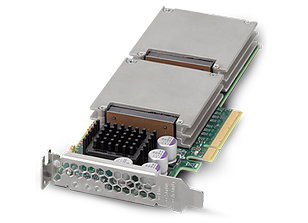
While I haven't seen one in action yet, the flash pack seems to be 6 Sun Flash Accelerator F40 PCIe Cards each of which has a capacity of 400 Gb.  These cards run amazingly fast with read times of more than 2 GB/second (write time is about half that speed at 1+ GB/second).  These cards normally sell for almost $6K each, so Oracle is providing the flash add-on pack for no more markup than you'd get if you bought them on your own (but you'd then have to get them into the Exalytics machine all on your own).

This Matters If You Own Essbase

Why would you want this?  Essbase, primarily.  Essbase uses a ton of disk I/O and one of the ways Exalytics can speed up Essbase is by pulling your cubes into a RAMDisk (since you have 1 Tb of RAM to play with).  At some point, though, it has to get that data from physical drives to a RAMDisk (unless you're building all your cubes at start up in memory each time).  Having blazingly speedy flash drives with .25 millisecond read latency allows you to store your cubes on the flash drive and then pull into RAM much more quickly than reading from traditional drives.

We have tested Essbase running on flash drives and it helps everything (particularly minimizes the negative effects of fragmentation since seek time drops to basically nothing on flash).  For customers buying Exalytics primarily for Essbase, the Exalytics Flash Upgrade Kit should be strongly considered with every Exalytics purchase (and if you already own Exalytics, buy it to put on top).

OBIEE is much less affected by hard drives, so while it may help OBIEE, this really matters a lot more to Essbase customers.

Oracle EPM Fully Supported on Exalytics

Since we're on the subject of Exalytics, now that 11.1.2.3 is out, all Oracle EPM/Hyperion components certified to run on Linux will run on Exalytics PS2.  These include:

  • Administration Services
  • Calculation Manager
  • EPM Workspace
  • Essbase Server
  • Essbase Studio Server
  • Financial Reporting
  • Interactive Reporting (32-bit only)
  • Oracle HTTP Server
  • Planning
  • Profitability and Cost Management
  • Production Reporting (32-bit only)
  • Provider Services
  • Reporting and Analysis Framework Services and Web Application 
  • Shared Services
  • Web Analysis

January 12, 2012

Exalytics - Pricing Has Been Announced

The official catchy Oracle name is "Exalytics In-Memory Machine X2-4" which come to think of it is not very catchy but does sound techie.  Larry Ellison announced Exalytics at OpenWorld 2011 to great fanfare and little details.  In a nutshell, it's Essbase, OBIEE, and TimesTen running in-memory on a really powerful server.  How powerful?  40 Intel cores (4 Intel Xeon E7-4800 processors with 10 cores each), a terabyte of RAM, an InfiniBand backbone (40 GB/s when talking to Exadata), two 10 GB/s ethernet ports for connecting to non-Exadata sources, and 3.6 TB of hard drive.  Imagine Essbase running fully in memory with ethernet speeds so powerful it's like you're running Essbase locally (subject to the speed of your actual corporate network, of course).

It's an exciting development for those people who want to make BI virtually real-time.  There's even a slightly modified front-end on the OBIEE side of things to make queries a more interactive "speed of thought" activity.  If you want to make Essbase even faster, this is the solution for you.  Early benchmarks have been all over the map (I've seen 5 times improvement all the way up to 80 times improvement) but suffice to say, that once you've tuned your Essbase cubes for running in-memory, you'll be looking at five-fold improvement at the bare minimum.  If you want to learn more, Oracle has an in-depth whitepaper at:

Various rumors have leaked out on the pricing for Exalytics, but it's now been finalized and posted on the Oracle website. While there are a few places where you can find this on the web this morning (including the actual PDF of the pricing from Oracle), the best summary I've read comes from Chris Kanaracus at IDG.

Here are the pricing highlights:
  • Hardware: $135,000
  • Processor Licenses of TimesTen: $34,500
  • Named User Licenses of TimesTen: $300
  • Processor Licenses of BI Foundation Suite: $450,000
  • Named User Licenses of BI Foundation Suite: $3,675
Some additional points:
  • Annual Maintenance is the typical 22% of net.
  • Licenses of TimesTen and BI Foundation Suite must be equal (if I'm reading a footnote on page 8 of the price list correctly).
  • BI Foundation Suite includes Essbase, OBIEE, and Oracle Strategy & Scorecard Management.  The pricing above is the current pricing for BI Foundation Suite (technology price list, page 5).
  • Processors must be licensed for every core meaning full list at processor licensing for every core on the box is almost $20,000,000 (though the article points out that Oracle would probably drop that as much as 70%). That's still a lot of money so I foresee most companies going with the named user license.
  • Oracle will probably discount named users as well. Assume ~50% discount on these (though Chris Kanaracus points out that it can go as much as 70% for large deals). Hardware, following Oracle traditional appliance discounting, will discount at most 25%.
Following the math, list price for 100 users (the minimum you're allowed to buy) would be about:
  • Hardware: $135,000
  • Software: $397,500
  • List Total: $532,500
  • Discount: $232,500 (25% hardware, 50% software)
  • Net Total: $300,000
  • Maintenance: $66,000 (due on signing for 1st year)
It's expensive, to say the least, but keep in mind that list for 100 users of just Essbase is $290,000 and this gives you some great hardware, Essbase, OBIEE, and TimesTen with everything pre-installed and configured (reducing your infrastructure costs).  I don't know what Oracle will do if you already own licenses of BI Foundation Suite.  My guess is (and I don't work for Oracle) that they won't make you pay for it again, but you'll at least have to pay for the full hardware and TimesTen.


Before I leave the subject of Exalytics, I have to point out just how worried SAP is about Exalytics competing with their HANA solution.  SAP's Sanjay Poonen (President, Corporate Officer of Global Solutions at SAP) wrote one of the worst attack pieces I've ever read right after Exalytics was announced.  To summarize his point, Essbase is an old dying OLAP technology that's been around for 20 years and is therefore worthless.  First of all Sanjay, the relational database has been around a lot longer than that and no one is saying that RDBMS' are going away.  But my main problem with his article is that if you take him at face value, he has no idea about Essbase beyond 10 year old bad competitive intelligence information.  To quote from his article he paid to post on Forbes.com:
Essbase even with all its “optimization” cannot efficiently run in-memory – you still have to do pre-calculations and pre-aggregates, with no ability to do calculations on the fly. You’d have to limit how far the Essbase calculations propagate to ensure performance doesn’t blow up, and insert operations force the indexes in the database to be rebuilt, thus ruining performance...
Um, not to imply that no one fact checked your essay Mr. Poonen, but you're talking about Essbase Block Storage (the 20 year old technology which most would think means it's more reliable than something released in the last 2 years).  Essbase Aggregate Storage (created about 6 years ago) was created to solve all these problems.  It's a fundamentally different architecture than Essbase block storage: it doesn't need to be aggregated, it doesn't need to be pre-calculated, and it does all formulas and calculations on the fly.  There is no separate index that needs to be rebuilt.  Basically, all your problems you're listing (forgetting that there are many things the Essbase Block Storage does better than any OLAP technology out there), are for the Essbase Block Storage technology.

I would forgive Sanjay Poonen for just using out-dated information under the excuse that he doesn't have access to Essbase directly, but a simple Google search takes you to the Essbase Wikipedia page where it defines Essbase Aggregate Storage:
Although block storage effectively minimizes storage requirements without impacting retrieval time, it has limitations in its treatment of aggregate data in large applications, motivating the introduction of a second storage engine, named Aggregate Storage Option (Essbase ASO) or more recently, Enterprise Analytics. This storage option makes the database behave much more similarly to OLAP databases like SQL Server Analysis Services.  Following a data load, Essbase ASO does not store any aggregate values, but instead calculates them on demand.

That text has been on Essbase's Wikipedia page for a few years, so the only conclusion I can draw is that either Sanjay doesn't know how to use Google, or he was blatantly ignoring the facts.  Assuming he's not a moron, SAP must be very afraid of Exalytics to put this piece together and hope no one pointed out how fundamentally errant the whole discussion is.  I don't have time to point out every one of the wrong things in his article, but if you wish to comment on his article, visit here, and feel free to correct anything you disagree with.

And just in case Sanjay thinks I'm not willing to stand behind what I write, I challenge him to a cube build-off.  Let's get together and put whatever cube technology SAP is pushing today (SAP BW?  SAP BIW?  Business Objects?  HANA?) up against Essbase.  You and I can jointly benchmark cube build time, query time, calculation time, whatever you want, and we'll both jointly publish the results.  If you're not afraid of how the results will come out, call my office at 01-972-735-8716.  Ask for Edward Roske and say it's Sanjay Poonen calling.  I'll make sure my receptionist knows to forward your call to my cell anywhere I am in the world.  I look forward to hearing from you.

When does Exalytics release?
Exalytics should be generally available soon, but it has to wait until, among other things, Essbase 11.1.2.2 comes out since they're tweaking Essbase to run better in-memory.  If I had to guess, I'd say before the end of Oracle's fiscal year (May 2012).  Exalytics will continue to make Oracle Essbase and OBIEE a factor to be reckoned with going forward.  I'm told there's a waiting list for the first Exalytics boxes to come off the line, so call your Oracle rep now if you're interested.